

Your signature is more than just ink on paper—it represents your identity, authority, and trust. Whether you’re signing property papers, financial documents, contracts, or even digital files, the thought of someone forging your signature can be deeply unsettling. In today’s fast-moving world, both handwritten and digital signature verification have become essential tools for personal and professional security.
This blog explains how signature verification works, why you may need it, and how signature verification tests help protect against misuse.
Why Signature Verification Matters
Forged signatures are not rare. They can appear on checks, loan applications, agreements, or business documents. If undetected, such forgery can lead to financial losses, property disputes, or even criminal cases.
Getting your signature verified ensures that:
- Only you are held accountable for documents you actually signed.
- Forged papers are detected before they can harm you.
- Courts and authorities can rely on expert reports to prove authenticity.
In both manual and digital signature verification, the goal is the same—ensuring your identity isn’t wrongly used.
Signature Verification Process
At its core, the signature verification process compares the questioned manual or electronic signature with authentic samples. Experts and systems look at various factors that impart originality to a signature during the document signing process, such as:
- Stroke formation and flow
- Pen pressure and speed
- Spacing and alignment
- Rhythm and natural variations
With signature verification tests, advanced tools, and biometric software, these features are available digitally. The system compares thousands of data points to determine if the signature is real or forged and proves or disproves the authenticity of the signed document.
Common Situations Where You May Need Verification
People seek verification not just in fraud cases but in everyday legal and financial matters. Some common reasons include:
- Suspected forged property documents or wills
- Banking or loan agreements signed without consent
- Business contracts signed by unauthorized individuals
- Misuse of digital signatures on PDF or online forms
In such cases, using digital signature verification or consulting a certified forensic expert is often the fastest way to confirm authenticity.
Manual vs. Digital Signature Verification
Traditional verification involves handwriting experts who closely inspect signatures with magnifiers, scanners, and comparison charts. While effective, this method is time-consuming and depends heavily on human judgment.
Digital signature verification, on the other hand, uses mathematical algorithms, biometric analysis, and pattern recognition to deliver faster and more precise results. It can process thousands of documents in minutes, making it especially useful for organizations or individuals handling bulk verifications.
For most people, the ideal approach is combining both—using signature verification test for quick checks, and expert analysis for legal or high-stakes documents.
The Role of Online Signature Verification Tests
With digital life becoming the norm, more people are signing documents electronically. That’s where signature verification becomes crucial. Platforms and forensic labs now offer secure services where you can upload documents and get them authenticated quickly.
Benefits include:
- Instant results with high accuracy
- Secure encryption for sensitive data
- Convenience of checking signatures from anywhere
- Legally admissible reports when handled by certified providers
Whether it’s verifying a PDF signature or confirming authenticity in an online agreement, digital sign verification makes the process easy and accessible.
What Types of Forgery Can Be Detected?
Forgery can take many forms, but digital signature verification and forensic analysis can detect them effectively. Some common types include:
- Freehand forgery: Someone imitates your signature without a guide.
- Traced forgery: A copy traced over your real signature.
- Simulated forgery: A practiced version that looks close but lacks natural flow.
- Digital forgery: A scanned or copied version inserted into documents.
The more sophisticated the forgery, the more valuable the signature verification test becomes.
Why Choose a Trusted Provider
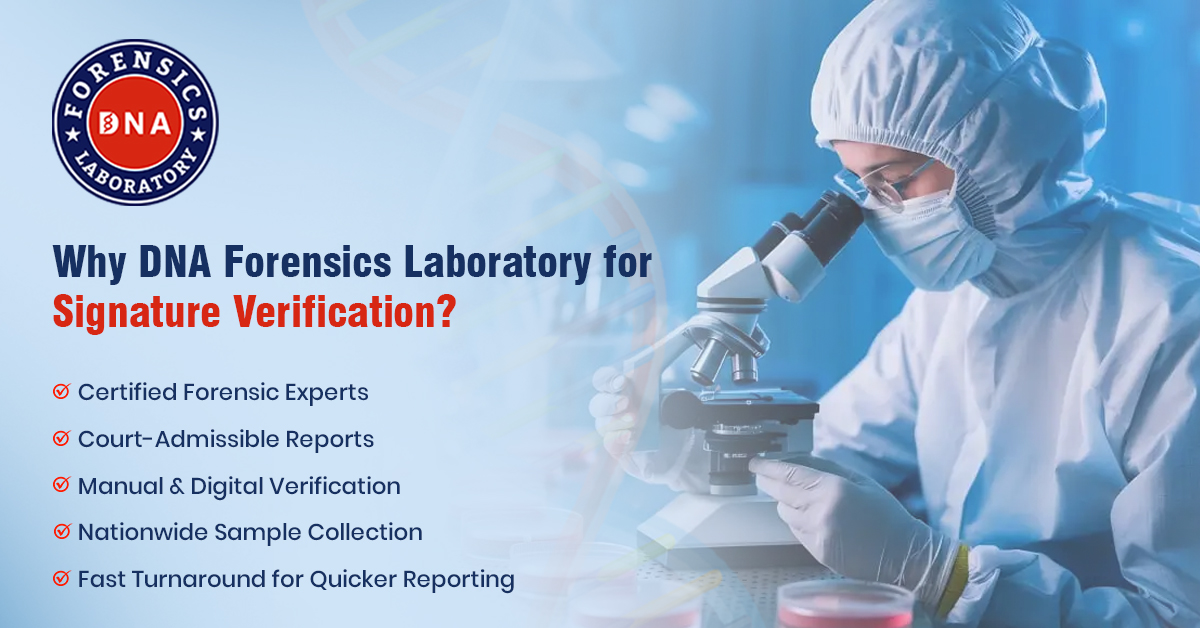
Not all services offer the same reliability. For legally valid reports, you need an accredited provider like DNA Forensics Laboratory Pvt. Ltd. With years of experience in forensic services, the lab combines both manual and digital signature verification techniques.
What you get:
- Certified forensic experts
- Court-admissible reports
- Fast turnaround with online support
- Nationwide collection and consultation services
Choosing the right provider means your case is handled professionally and discreetly.
Final Thoughts
Your signature is more than a mark—it’s your identity. With rising fraud and misuse, relying on dependable manual and digital signature verification services is no longer optional; it’s necessary.
If you ever suspect misuse, don’t wait. Collect your genuine signature samples, secure the questioned document, and consult a trusted forensic lab. With professional support, you can protect your identity, prevent fraud, and ensure your signature always stands for you—and you alone.
Call us at +91 8010177771 or WhatsApp at +91 9266615552 to learn more or directly book your Signature Verification test.
Frequently Asked Questions
Q1. What is Signature Verification?
Ans: Signature verification is the process of confirming authenticity by comparing handwritten or digital signatures against stored reference patterns.
Q2. How Signature Verification Works?
Ans: It works by analyzing signature characteristics—such as strokes, pressure, or digital algorithms—to distinguish genuine ones from potential forgeries.
Q3. Why Signature Verification is Important?
Ans: It prevents fraud, ensures document authenticity, protects businesses from financial losses, and strengthens compliance with legal and security standards.
Q4. How Can I Validate my Signature?
Ans: You can validate a signature using expert manual examination or digital verification tools that analyze patterns, angles, and pressure data. However, you should get your signature verification done from a certified forensic lab, like DNA Forensics Laboratory Pvt. Ltd.
Q5. How to Check Digital Signature Validity?
Ans: Digital signature validity is checked through verification software that confirms the signer’s certificate, encryption, and compliance with authentication standards.
Q6. Can Signatures Be Verified Online?
Ans: Yes, advanced online signature verification systems use biometric analysis and pattern recognition algorithms to authenticate handwritten and digital signatures.
Q7. Can I Verify a PDF Signature Online?
Ans: Yes, PDF signatures can be verified online through secure platforms that instantly check encryption, certificates, and signer authenticity. At DNA Forensics Laboratory Pvt. Ltd., we offer accurate and reliable manual and digital sign verification tests at competitive rates.


Sir one document forgery signature same forgery but the person not signed